Product Overview
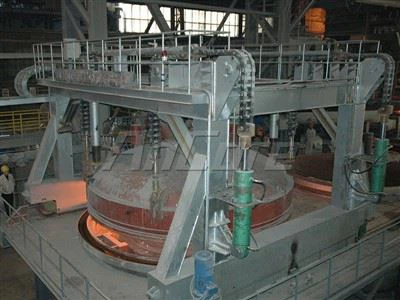
The 10T Ladle Refining Furnace (LRF) is a secondary refining unit specifically designed for small-scale steelmaking lines, specialty steel pilot production, foundries, and metallurgical R&D. Typically paired with an Electric Arc Furnace (EAF) or Induction Furnace (IF), the LRF is used for thermal compensation (reheating), composition micro-adjustment, deoxidation, desulfurization, and inclusion removal. It provides stable and controlled molten steel conditions for subsequent casting or continuous casting processes. Its compact design and cost-effective investment make it an essential upgrade for small-to-medium enterprises seeking to improve steel quality.
Working Principle
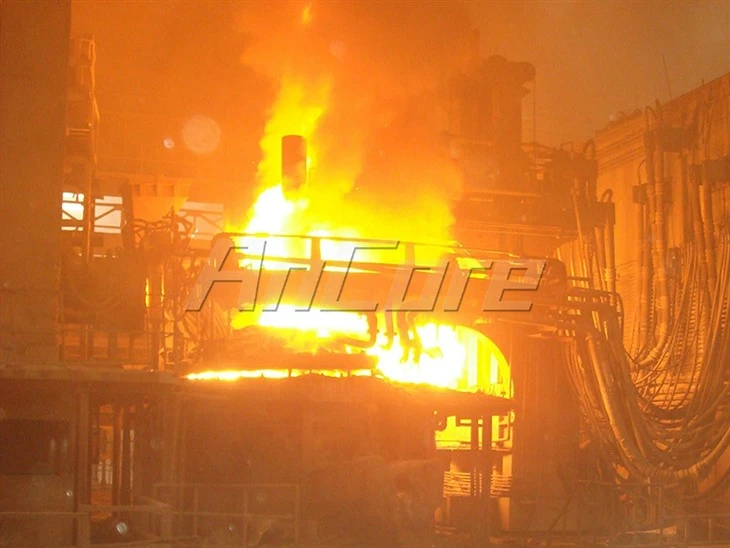
The 10T LRF utilizes a three-phase electrode submerged arc heating system to compensate for thermal loss in the molten steel. Simultaneously, a bottom-blowing argon stirring system creates a circulating flow within the ladle. This process ensures homogenization of temperature and chemical composition while promoting the flotation and removal of non-metallic inclusions. The entire metallurgical reaction takes place under a controlled atmosphere and specialized refining slag to ensure consistent and high-quality results.
Technical Features
Precision Thermal Compensation
- Electric arc heating compensates for heat loss during transportation.
- Precise control over casting temperatures.
- Meets the rigorous temperature requirements of small-tonnage molten steel.
01
Argon Stirring System
- Bottom-blown argon improves molten steel fluidity.
- Enhances temperature and chemical homogeneity.
- Facilitates the flotation and removal of inclusions.
02
Composition Micro-adjustment & Alloy Control
- Supports high-precision alloy additions.
- Reduces alloy oxidation loss (burn-off rate).
- Improves the consistency of the final chemical composition.
03
Compact Structural Design
- Small footprint, ideal for workshops with limited space.
- Optimized layout of furnace body, gantry, and electrode system.
- Easy installation, maintenance, and future scalability.
04
Optional Automation Control
- Supports PLC-based control systems.
- Real-time monitoring of current, voltage, temperature, and other critical parameters.
- Enhances operational stability and safety.
05
Product Advantages
Enhanced Steel Quality Stability
Refining effectively minimizes composition fluctuations and temperature gradients, reducing casting defects and ensuring high-reliability output.
Optimized Production Cycles
By separating reheating and refining from the primary furnace, the melting equipment (EAF/IF) can focus solely on melting. This increases overall throughput, especially for small-scale continuous production rhythms.
Energy Efficiency & Environmental Performance
Targeted arc heating prevents overheating. Argon stirring improves metallurgical reaction efficiency, reducing unnecessary energy consumption. Compatible with dedusting and fume treatment systems.
Controlled Investment for Small-to-Medium Projects
The CAPEX and OPEX of a 10-ton LRF are relatively low, making it ideal for pilot lines, technical upgrades, and small-scale steel plants.
Application Scenarios
Small steel mills or experimental production lines.
Production of alloy steel, tool steel, and small-batch specialty grades.
Molten steel refining for foundry enterprises.
Metallurgical research and new material development projects.
FAQ
Q1: What are the primary problems solved by a 10T LRF?
A: It primarily addresses thermal compensation, composition trimming, deoxidation/desulfurization, and inclusion removal to stabilize steel quality.
Q2: Which equipment is typically paired with a 10T LRF?
A: It is usually paired with an Electric Arc Furnace (EAF) or Induction Furnace (IF) as the secondary metallurgy stage.
Q3: How long is the average refining time?
A: Depending on the steel grade and refining requirements, the process typically takes 30 to 60 minutes.
Q4: Can the system be automated?
A: Yes. We can configure PLC and HMI systems for process monitoring and data logging according to client needs.
Q5: Is customization available?
A: Yes. We provide customized designs based on the specific steel grades, production capacity, and workshop layout.
Hot Tags: 10t ladle refining furnace, China 10t ladle refining furnace manufacturers, suppliers, factory, LF Ladle Refining Furnace, 70T Ladle Refining Furnace, lf vd vod refining furnace, VD VOD Vacuum Ladle Refining Furnace, 10T Ladle Refining Furnace