Product Overview
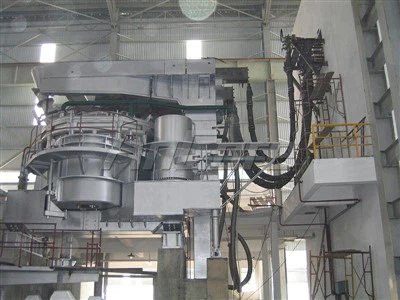
Heavy industrial steelmaking requires robust electromechanical and power conversion subsystems capable of withstanding severe thermal loads, electromagnetic stresses, and aggressive mill environments. This system integrates an Electrode Lifting Device and an EAF Transformer, deployed as a unified subsystem for Electric Arc Furnaces (EAF) and Ladle Furnaces (LF).
Electrode Lifting Device: Engineered for controlled vertical positioning, utilizing proportional hydraulic or servo-electric actuation to maintain optimal arc length and minimize electrode consumption.
EAF Transformer: Designed for extreme cyclic electrical loads, high current levels, thermal conditions, and short-circuit forces associated with arc furnace operation.
Both systems can be engineered as part of an integrated EAF electrical and electromechanical package for new installations, furnace upgrades, and retrofit projects.
-
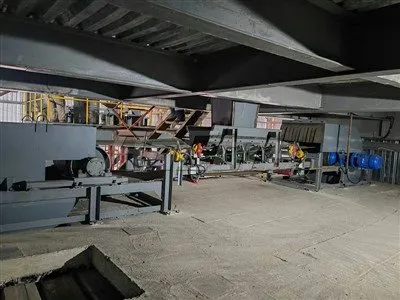
![Feeding System Of Electric Arc Furnace]() Feeding System Of Electric Arc Furnace1. A stable feeding system reduces unplanned furnace downtime and improves production controllability.2. Uniform and controlled charging contributes to stable furnace thermal conditions and
-
![Electrode Lifting Device]() Electrode Lifting Device1. Accurate electrode positioning maintains a stable arc and improves furnace efficiency.2. Stable lifting/lowering control ensures uniform electrode consumption and reduces operating costs.3.
-
![Ladle Transfer Car]() Ladle Transfer Car1.Features an all-welded heavy box-girder frame with superior torsional rigidity and thermal stability, ensuring zero structural deflection under full ladle loads exceeding hundreds of
-
![Electric Arc Furnace Hydraulics System]() Electric Arc Furnace Hydraulics System1.Utilizes advanced proportional servo-valves and electro-hydraulic integration to achieve millimeter-level precision in electrode lifting, furnace tilting, and roof rotation for optimized melting
-
![EAF Transformer]() EAF Transformer1.Engineered with reinforced axial and radial clamping and high-mechanical-strength windings to withstand frequent dead short conditions inherent in EAF operations.2.Equipped with a high-performance
-
![Dust Collector System]() Dust Collector System1.Utilizes high-performance ePTFE membrane or PPS needle felt media to achieve 99.9% collection efficiency for particles > 0.3μm, ensuring emissions consistently below 10mg/Nm³.2.Features an online
-
![Water Cooled Compensator]() Water Cooled Compensator1.Constructed with ultra-thin oxygen-free copper foils (0.1-0.3mm) via diffusion welding to ensure high current density and superior multi-directional movement compensation.2.Enclosed in a
-
![Induction Furnace Coil]() Induction Furnace Coil1.Manufactured from 99.9% oxygen-free heavy-wall rectangular copper tubing (T2 grade) to ensure minimum resistivity and maximum power conversion efficiency.2.Utilizes Class H or C mica-based
-
![Heavy Current]() Heavy Current1.Utilizes high-purity oxygen-free copper (OFC) busbars and a non-inductive secondary circuit layout to minimize electrical resistance and reactance for maximum power efficiency.2.Engineered to
-
![Forged Copper Tile]() Forged Copper Tile1.Manufactured from high-purity oxygen-free copper (T2/C11000) via multi-directional forging, achieving an electrical conductivity ≥ 98% IACS to minimize resistive power loss.2.The forged grain
-
![Submerged Arc Furnace Pressure Ring]() Submerged Arc Furnace Pressure Ring1.Manufactured from high-strength non-magnetic stainless steel or copper alloys to eliminate inductive heating and prevent thermal deformation in high-current electromagnetic fields.2.Equipped with
-
![EAF Electrode Holder]() EAF Electrode Holder1.Manufactured from high-purity forged copper or centrifugal cast alloys with precision-machined contact surfaces to minimize contact resistance and thermal energy loss.2.Features a long-stroke


Working Principle & System Architecture
Electrode Lifting and Regulation
The electrode lifting device operates as part of the furnace electrode regulation system rather than as an independent control mechanism:
Furnace Electrical Measurement: Operating parameters such as current, voltage, and impedance are monitored by the furnace regulation system.
Regulation and Position Command: The system processes measured conditions and generates the required electrode movement command.
Actuator Response: A proportional hydraulic system or servo-electric actuator converts the command into vertical movement.
Electrode Position Adjustment: The lifting mechanism adjusts electrode position according to dynamic furnace conditions.
This arrangement allows the mechanism to interface directly with existing electrode regulation and Level 1 control architectures.
EAF Transformer Power Conversion
The furnace transformer reduces incoming high-voltage supply to the low-voltage, high-current output required by the furnace. Primary voltage, secondary voltage, rated power, impedance, tap range, insulation level, and cooling arrangement are engineered to match furnace electrical design, utilizing either off-circuit or on-load tap changers.
Key Features
Application-Specific Transformer Design: Core and winding parameters are engineered according to the furnace electrical system, including rated power, secondary voltage, impedance, and tap range.
Short-Circuit Mechanical Strength: Transformer winding structures withstand radial and axial electromagnetic forces generated during furnace short-circuit conditions, supported by calculated clamping components.
Responsive Electrode Positioning: The lifting device provides controlled movement and rapid position correction determined by the actuator, load, and control configuration.
Heavy-Duty Structural Design: Masts, arms, and mounting structures are engineered for severe EAF mechanical loads and thermal environments, adhering to approved fabrication drawings.
Optimized Core & Winding System: Grain-oriented electrical steel and application-specific configurations
suppress no-load losses and core noise.
Water-Cooled Secondary Connections: Secondary current paths incorporate water-cooled copper conductors, flexible links, and expansion-compensation components for thermal movement.
Technical Specifications
|
Parameter |
Electrode Lifting Device (Typical 80t to 120t EAF) |
EAF Transformer (Typical 65 MVA) |
|
Primary Application |
EAF electrode positioning and regulation |
EAF high-current power supply |
|
Furnace Capacity |
Project-dependent (Medium to Large EAFs) |
Project-dependent |
|
Actuation / Power |
Proportional hydraulic or servo-electric |
Rated Power: Project-dependent (~65 MVA reference) |
|
Load & Stroke |
Max static load & stroke configured to furnace geometry |
Primary Voltage: Project-dependent |
|
Operating Speed |
Project-dependent lifting characteristics |
Secondary Voltage / Current: Project-dependent |
|
Cooling Method |
Hydraulic/structural cooling as required |
External Oil/Water Heat Exchangers (ODWF) / ONAN |
|
Insulating Medium |
N/A |
Mineral oil or suitable ester-based fluid |
Applications
Electric Arc Furnace (EAF):
Primary scrap melting, direct reduced iron (DRI/HBI) charging, and high-power carbon steel production.
Furnace Retrofit Projects:
Engineered around existing transformer vaults, furnace roofs, gantries, foundations, and busbars.

Ladle Furnace (LF):
Secondary metallurgy, alloy composition adjustment, desulfurization, and temperature homogenization prior to continuous casting.
New Furnace Installations:
Greenfield packages coordinating transformer, lifting, cooling, hydraulic, and control interfaces.
Furnace Configuration & Auxiliary Systems
Water-Cooled Components:
Dedicated circuits for electrode holders, current-conducting arms, and secondary conductors, specified by flow, pressure, and water quality requirements.
Hydraulic Power Unit (HPU):
Includes pumps, accumulators, proportional/servo valves, filtration, and pressure/temperature monitoring for hydraulic lifting configurations.
Secondary Busbars & Flexible Links:
Water-cooled copper conductors and flexible laminated links connecting transformer secondary terminals to furnace tilting delta closures.
Control & Communication Interfaces:
Integration with Level 1 PLC and regulation systems via digital/analog I/O, hardwired interlocks, or industrial Ethernet fieldbus protocols.
Manufacturing
Structural Manufacturing
Heavy structural components undergo CNC cutting of plates, machining of critical mounting surfaces, structural welding, stress-relief treatment, and dimensional inspection against approved engineering drawings.
Transformer Manufacturing
Manufacturing includes electrical steel cutting, core assembly, winding and conductor forming, insulation assembly, vapor-phase drying, active-part assembly, tank fabrication, and rigorous sealing processes.

OEM / Engineering Customization
Mechanical Customization:
Adapts to existing foundation dimensions, roof geometry, gantry arrangement, electrode spacing, and secondary connection layouts.
Electrical Customization:
Transformer parameters configured for rated furnace power, primary supply voltage, secondary voltage, impedance, tap range, and frequency.
Control Integration:
Adaptation to customer-specific electrode regulation and PLC architectures via verified electrical and communication interfaces.
FAQ
As one of the most professional furnace accessories manufacturers and suppliers in China, we're featured by quality products and good price. Please rest assured to buy durable furnace accessories made in China here from our factory. We also accept customized orders.
furnace accessories, Dust Collector System, EAf TransformerPopular Products