Product Overview
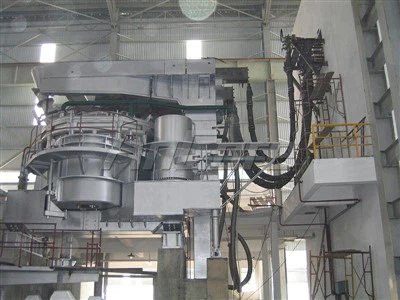
The LF / VD / VOD Refining Furnace System integrates Ladle Furnace (LF) heating, Vacuum Degassing (VD), and Vacuum Oxygen Decarburization (VOD) into a secondary metallurgy station installed downstream of an Electric Arc Furnace (EAF) or Basic Oxygen Furnace (BOF).
The system is designed to perform different secondary refining operations according to the selected process configuration, including:
LF: Ladle heating, temperature adjustment, alloy trimming, slag treatment, and bath homogenization.
VD: Vacuum treatment for reducing dissolved gases and supporting inclusion removal during secondary refining.
VOD: Vacuum oxygen decarburization for stainless and other alloy steels requiring controlled carbon reduction.
The system can be engineered for ladle capacities from 20 t to 150 t. It is intended for steel mills and integrated foundries producing automotive steels, bearing and spring steels, stainless steels, corrosion-resistant steels, and heavy structural alloy steels.
-
![VD/VOD Vacuum Ladle Refining Furnace]() VD/VOD Vacuum Ladle Refining Furnace1.Features a multi-stage steam ejector or dry mechanical pumping system to achieve pressures below 67 Pa, ensuring hydrogen levels 2.Deep Decarburization (VOD): Equipped with a vacuum-rated
-
![70T Ladle Refining Furnace]() 70T Ladle Refining Furnace1.Equipped with a 12-15 MVA high-capacity transformer to ensure a reliable heating rate of >4°C/min for 70-ton heats, optimizing overall cycle times.2.Features a fully automated 12-16 bin alloying
-
![10T Ladle Refining Furnace]() 10T Ladle Refining Furnace1.Powered by a 2.5-4 MVA transformer specifically rated for 10-ton heats, achieving a heating rate of ≥4°C/min to synchronize with Induction or EAF cycles.2.Features a 5-bin alloying system and
-
![LF Ladle Refining Furnace]() LF Ladle Refining Furnace1.Features a three-phase AC arc heating system with high-response electrode regulation, achieving heating rates of 3-5°C/min for tight chemical composition control.2.Equipped with advanced bottom


Working Principle & Furnace Structure
LF Process
The LF station uses three graphite electrodes for arc heating beneath a basic slag layer. Bottom argon stirring through porous plugs supports bath mixing and promotes more uniform temperature and composition during secondary refining.
VD Process
During VD treatment, the ladle is positioned inside a vacuum tank and the chamber is evacuated to reduce the pressure above the molten steel. Vacuum treatment is used to remove dissolved gases such as hydrogen and nitrogen and to support inclusion flotation.
VOD Process
The VOD configuration introduces oxygen through a water-cooled top lance while the molten steel is treated under vacuum. The process is used for controlled decarburization of stainless and alloy steels. Oxygen flow, vacuum conditions, bath temperature, and process parameters should be selected according to the steel grade and required metallurgical endpoint.
Mechanical Structure
Vacuum Tank & Lid: Fabricated from pressure-vessel steel such as Q345R or an equivalent material, subject to the applicable project specification. External stiffening structures support the tank assembly, while the flange and cooling arrangement are designed for vacuum operation and thermal management.
Gantry & Electrode Rigging: Column-guided or mast-type electrode arms can be equipped with hydraulic or servo-driven positioning systems. The configuration is selected according to electrode travel requirements and furnace design.
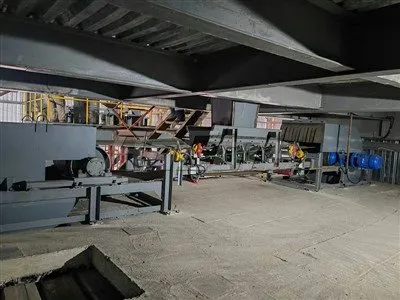
Ladle Transfer Car & Alloy Dosing: A rail-mounted ladle transfer car moves the ladle between process positions. Alloy and flux dosing systems can be configured with weighing hoppers for controlled material addition under atmospheric or vacuum conditions, depending on the process design.

Key Features
Closed-Loop Electrode Regulation:
PLC-based electrode control regulates electrode movement according to operating conditions and supports stable arc control during LF heating.
Multi-Stage Vacuum Pumping System:
The vacuum system can combine mechanical booster pumps with steam ejectors or dry screw pumps. The specified vacuum level and evacuation time depend on the pumping configuration, ladle capacity, process route, and project requirements.
Bottom Argon Stirring:
Dual or triple porous-plug configurations can be used with independent argon flow control. The stirring arrangement is selected according to ladle size, steel grade, refractory configuration, and required bath mixing conditions.
Vacuum-Compatible Alloy Addition:
Vacuum lock-hopper systems can be incorporated where alloy or flux additions are required during vacuum treatment without fully interrupting the vacuum process.
Water-Cooled Components:
Dedicated cooling circuits can be provided for heat-exposed components such as the tank rim, ductwork, and VOD lance. Flow, temperature, and pressure monitoring can be integrated with the control system according to the equipment configuration.
Technical Specifications
|
Parameter |
Specification Range |
|
Ladle Capacity |
20 t - 150 t |
|
Transformer Capacity |
10 MVA - 65 MVA |
|
Secondary Voltage |
320 V - 650 V (Multi-tap configuration) |
|
Electrode Pitch |
350 mm - 850 mm |
|
Ultimate Vacuum Pressure |
<= 67 Pa (0.5 Torr) |
|
Evacuation Time to 133 Pa |
<= 8 - 12 minutes |
|
VOD Oxygen Blowing Rate |
0.3 - 1.2 Nm3/min·t |
|
Cooling Water Flow Rate |
300 m3/h - 1200 m3/h |
Configuration Selection & Applications
LF Configuration
Recommended for secondary refining operations requiring ladle heating, temperature adjustment, alloy trimming, slag treatment, argon stirring, and bath homogenization.
LF + VD Configuration
Used where vacuum treatment is required in addition to LF refining, particularly for steel grades requiring controlled dissolved-gas levels and vacuum-assisted secondary metallurgy.
Typical Applications: Automotive and high-quality structural steels, bearing and spring steels, heavy forging steels, and alloy steels requiring vacuum treatment.
LF + VOD Configuration
Used for stainless and alloy steel production where vacuum oxygen decarburization is required for controlled carbon reduction.
Typical Applications: Austenitic stainless steels, martensitic stainless steels, duplex stainless steels, and corrosion-resistant alloy steels.
LF + VD + VOD Configuration
An integrated configuration combining LF heating, vacuum treatment, and vacuum oxygen decarburization for production routes requiring multiple secondary metallurgy functions within one system.
Furnace Configuration & Auxiliary Systems
Electrical System:
Includes a furnace transformer, motorized high-voltage vacuum circuit breaker, and harmonic mitigation equipment. Transformer capacity and electrical parameters are selected according to furnace capacity and local grid requirements.
Hydraulic System:
A hydraulic power unit configured for electrode movement, mechanical positioning, and other hydraulic functions, operating within a pressure range of 16 - 21 MPa, subject to the final design.
Fume Extraction & Baghouse System:
Canopy hood and extraction ductwork connected to a pulse-jet fabric filter system for particulate control. Additional gas-treatment equipment, such as lime injection, can be specified according to actual process emissions and local environmental requirements.
Process Automation:
Level 1 and Level 2 automation integrating industrial PLC control with metallurgical process models for functions such as alloy calculation, process monitoring, temperature prediction, and heat data management.
Manufacturing & Quality Control
Manufacturing and inspection procedures include:
Structural Fabrication:
Heavy steel plates processed using CNC cutting equipment and prepared for welding, utilizing Submerged Arc Welding (SAW), Gas Metal Arc Welding (GMAW), and FCAW according to project requirements.
Weld Inspection:
Critical pressure-related and structural welds inspected using non-destructive testing (NDT) methods such as radiographic testing (RT) and ultrasonic testing (UT) according to project inspection plans.

Dimensional Verification:
Laser measurement equipment used for dimensional inspection of vacuum tanks, gantry structures, electrode assemblies, and critical components to ensure compliance with engineering tolerances.
Factory Acceptance Testing (FAT):
Comprehensive functional testing of hydraulic systems, electrical control panels, PLC logic, mechanical interlocks, and specified equipment functions prior to shipment.
OEM / Engineering Customization
Brownfield Retrofit:
Engineered around existing meltshop constraints, including available bay space, crane hook height and lifting capacity, foundation/pit dimensions, ladle handling arrangements, electrical infrastructure, and cooling water availability.
Ladle Interface Engineering:
Custom ladle seat design matching existing plant ladle shell dimensions, trunnion arrangements, refractory configurations, and transfer systems.
Utility Integration:
Adapted to local utility conditions, including 50 Hz or 60 Hz power supply, high-voltage systems from 10 kV to 35 kV, cooling water circuits, compressed air, and plant-wide L2 automation networks.
FAQ
As one of the most professional LF/VD/VOD refining furnace manufacturers and suppliers in China, we're featured by quality products and good price. Please rest assured to buy durable LF/VD/VOD refining furnace made in China here from our factory. We also accept customized orders.
70T Ladle Refining Furnace, LF Ladle Refining Furnace, VD VOD Vacuum Ladle Refining FurnacePopular Products