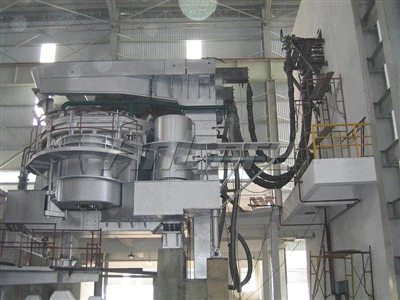
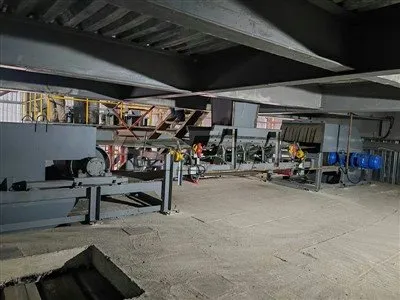
In today's wave of Industry 4.0 sweeping through the global manufacturing sector, the competitive landscape of the metallurgical industry is undergoing a fundamental shift. In the past, an enterprise's "moat" was often built on extensive scale expansion; today, data-driven "precision smelting" has become the watershed for determining future competitiveness. Within this transformation, intelligent furnace control systems serve as the vital bridge spanning the gap between traditional manufacturing and "Intelligent Manufacturing."
The Evolution of Production Paradigms: From "Manual Experience" to "Digital Precision"
To deeply understand the necessity of intelligent systems, one must first examine the limitations of traditional smelting modes. For decades, the operation of Electric Arc Furnaces (EAF) and Submerged Arc Furnaces (SAF) relied heavily on the intuition and experience of frontline workers. Operators judged the melting process by observing the flame color and listening to the sound of the arc, manually adjusting parameters accordingly.
This mode inevitably introduced "uncertainty": variations in operation between different shifts led to significant fluctuations in energy efficiency, while the lag in human response could result in electrode breakage or transformer overload. The essence of an intelligent control system lies in converting these fragmented, subjective manual experiences into standardized mathematical models. By utilizing high-precision sensor arrays, the system translates physical changes within the furnace into digital language in real-time. This is not merely a replacement of tools; it is a total evolution of the production paradigm from "sensory perception" to "rational calculation."
The Logic of Closed-Loop Control: Deep Synergy of Multidimensional Technologies
The process of translating this intelligent vision into productivity relies on a logically rigorous automation architecture, typically centered around PLC and HMI. This architecture intervenes in the smelting process through three technical dimensions:
First, instantaneous-response intelligent electrode regulation. This is the "nerve center" of the control system. Because scrap material constantly collapses and shifts during melting, impedance is in a state of violent fluctuation. Intelligent electrode regulators monitor impedance changes at millisecond speeds and drive hydraulic systems to adjust electrode height instantaneously. This rapid closed-loop control minimizes the probability of "broken electrodes" and significantly reduces the impact on the plant and external power grids by smoothing out current fluctuations.
Second, real-time parameter optimization through multi-energy synergy. Intelligent systems go beyond merely monitoring power input; they achieve coordinated control over the oxy-fuel ratio and power curves. By analyzing the furnace atmosphere and temperature feedback in real-time, the system automatically adjusts burner output to ensure the optimal ratio between electrical and chemical energy during the melting phase. This "actuarial" energy distribution eliminates the energy waste common in traditional operations.
Third, deep insights based on Big Data platforms. Modern control systems integrate big data analysis modules to record detailed smelting durations, electricity consumption per ton of product, and unit electrode consumption for every heat. These data points are no longer static numbers; through horizontal and vertical comparative analysis, they help management identify hidden energy-saving opportunities and process bottlenecks. This "self-optimization" capability allows the production logic to iterate continuously as data accumulates.
Reshaping Commercial Value: Why Digitalization is the Ultimate Guarantee of ROI
For B2B decision-makers, the value of an intelligent system ultimately manifests as the secondary extraction of profit margins. Why is choosing a manufacturer with deep software development capabilities the key to achieving long-term returns?
Initially, it acts as a hedge against labor costs and risks. As the demographic dividend of skilled labor disappears, relying on a few experienced "master technicians" has become a significant risk. Intelligent systems reduce dependence on specific personnel, making the production process highly replicable and stable. Simultaneously, the system's self-diagnostic functions can issue warnings before failures occur, minimizing the massive losses associated with unplanned downtime.
Furthermore, it enables the extreme suppression of energy and material consumption. In an environment where electricity prices and electrode costs fluctuate wildly, a 1% saving in energy consumption often translates to millions in annual cost savings. The precision control provided by intelligent systems leads directly to a decrease in the cost per ton of product, which is decisive in the thin-margin competition of today's market.
Finally, it is the essential entry point to the "Digital Factory." A control system equipped with remote communication interfaces means production data can seamlessly interface with an enterprise's ERP or MES systems, achieving full-chain synergy from procurement and production to sales. This provides a head start in future carbon footprint tracking, green evaluations, and flexible production.
Conclusion
An intelligent furnace control system is far more than a simple assembly of electronic components; it is a continuously evolving production logic. By digitizing manual experience and implementing closed-loop management of multidimensional parameters, enterprises gain not only short-term cost advantages but also long-term digital assets. For forward-thinking metallurgical enterprises, choosing an equipment partner who understands both machinery and software algorithms is essentially purchasing a passport to the era of Industry 4.0. In this contest of efficiency and intelligence, only those who embrace digital precision will remain invincible.